Slow flavour
Give onions the time they need
Soft, evenly brown onions come from a patient pan. The useful shortcut is learning when to stir and when to add a splash of water.
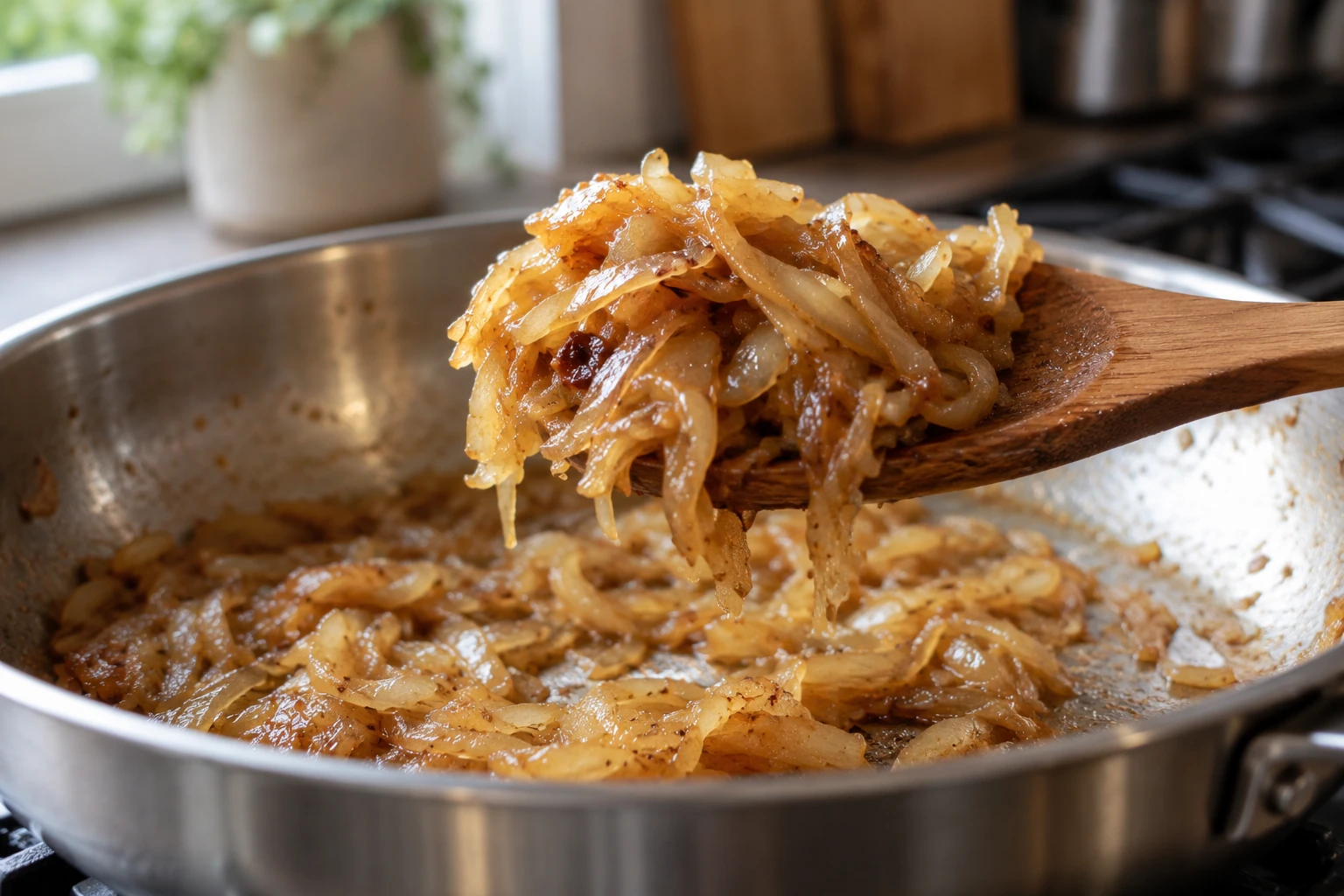
THE PAYOFFSweet, soft onion ribbons without burnt edges
TAKE IT STEP BY STEP
The method.
Slice evenly
Halve the onions and slice about 3 mm thick. Similar thickness helps the pieces soften together. Use a wide pan so the onions have contact with the base; a deep, narrow pile takes longer to lose moisture.
Soften first
Warm the oil and butter over medium-low heat. Add the onions and salt, then stir to coat. Cook for 10–15 minutes, stirring occasionally, until the onions have collapsed and become soft rather than crisp at the edges.
Turn the heat down
Continue over low to medium-low heat, stirring and scraping the base regularly. The onions should gradually become golden and then brown throughout. Allow roughly 45–60 minutes overall, sometimes longer; the moisture and pan make a difference.
Use water to protect the colour
If a brown glaze sticks firmly to the pan, add 1 tablespoon of water and scrape it into the onions. Let the water evaporate and keep going. Black patches or a bitter smell mean the heat has gone too far.
Stop at the right depth
Taste a cooled spoonful. The onions should be soft and sweet, with an even brown colour. Take them off the heat before they become bitter. Added sugar is unnecessary for this plain version.
WHEN IT GOES SIDEWAYS
A small fix.
Dark edges, pale middles
Lower the heat and stir more evenly. A splash of water can loosen browned residue, but cannot remove a burnt taste.
They are still pale after half an hour
Keep cooking gently and let excess moisture evaporate. A large batch or narrow pan needs more time.
The onions stick every few seconds
The pan is too hot or too dry. Lower the heat and add a tablespoon of water, scraping the base carefully.
Use a spoonful in a sandwich, on crisp potato cakes or alongside cheese. Make the onions while another slow dish is cooking, rather than rushing them at the end.
THE USEFUL TOOLS
Useful tools for this technique.
Use what you already have. If you need something, these are a few options to consider.
As an Amazon Associate I earn from qualifying purchases.
Amazon.com · US store
Tramontina Signature Tri-Ply Clad 12-inch Frying Pan
An uncoated stainless-steel pan lets you build browned bits, then lift them into a pan sauce.
Before you chooseMatch pan size to your burner and the amount you cook; avoid crowding the surface.
View on Amazon.com